banner_JUL07.gif

Next Year's Sale Friday April 3, 2009

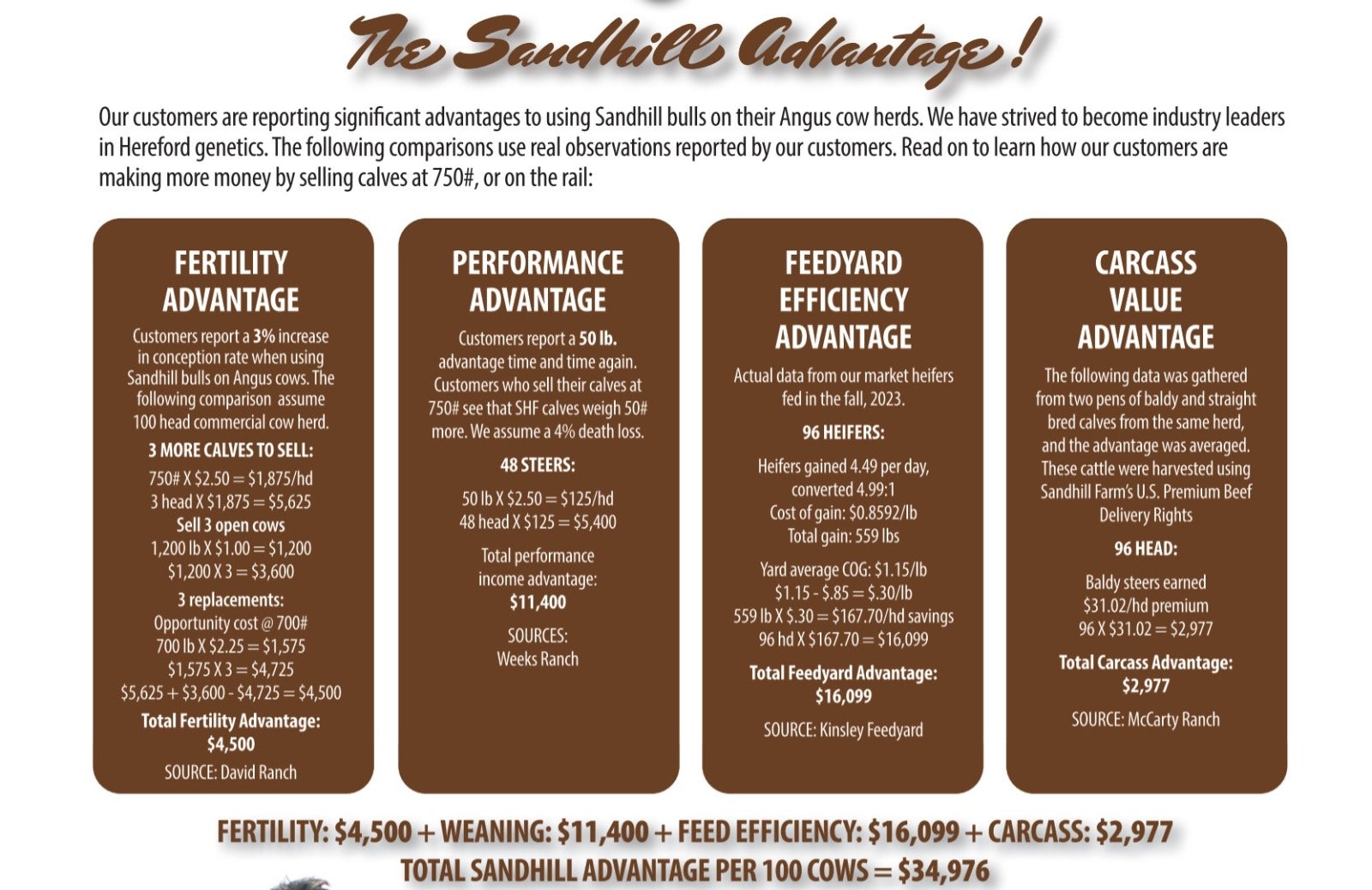
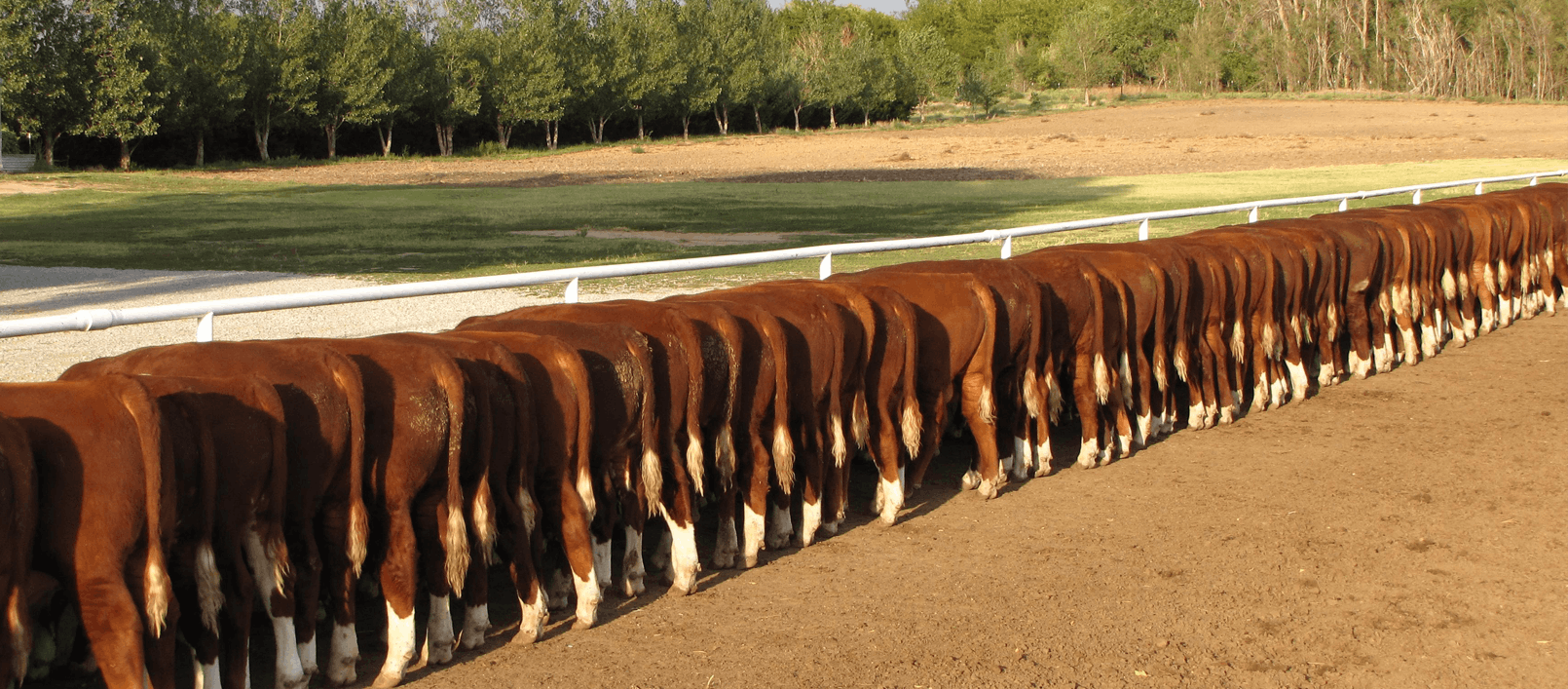
Our newest set of steers have been fed and harvested.

The following is a summary of the performance and data we learned.
Days on feed: 157
Average daily gain: 3.93lb/day
Feed conversion (Dry wt.) 5.36 lb feed/ lb gained
Cost of Gain $.7330
% Choice 58%
Yield Grade 2.7
These steers were fed at Ford Ct Feeders. Out of 228 pens feed, these steers had the #1 feed conversion and best cost of gain.

When breaking down the sire groups, the “next generation” or sires we are using now, Increased our carcass weight 1.2%
Increased our YG 5.6%
Increased our Marbling 24%
Increased our Rib Eye Area .8%
Increased our Back Fat 1.3%

S10dgtPrgrss.jpg


S20Phnxdgter.jpg

Daughter of Progress

Daughter of Phoenix

S03prgressdgt.jpg

Daughter of Progress

2008 EPDs for Next Years Sale Bulls

Here are the average EPDs on next years sale bulls, and how they ranks nationally.

Birth Wt
+1.8
Top 15%
Weaning Wt.
+48
Top 20%
Yearling Wt.
+75
Top 30%
Milk
+18
Top 35%
Rib Eye
+.37
Top 10%
IMF
+.15
Top 10%
Baldy Index
+21
Top 5%
CEZ Index
+17
Top 15%
CHB Index
+25
Top 5%

Moving Into The Future

Through the use of todays technology and the previous generations wisdom, our registered program is moving into the future . We are breeding cattle that enhance the profit traits and convenience traits of our cattle. From the cowherd that has worked for generations, we are maintaining muscle, volume, udder quality and performance. In order to create the cowherd for the future, we are identifying the outliers from within the herd that will help us in our newer goals of carcass traits and curve bending growth. These outliers are then used as sires, or donor cows to make the herd better. We have brought in a few bulls and cows as genetic tools to address areas that needed tweaked. Compared to the previous generations, faster improvement is made using EPD's , ultrasound, actual carcass data, and some DNA testing.
Progress is measured by repeat customers and their profit!

SHF Bulls For Your Crossbreeding Program!

When analyzing the different traits that contribute to profitability in a cowherd, longevity and reproductive efficiency are the very top and most profitable. These are both lowly heritable and therefore crossbreeding has the greatest effect. It is amazing how many times I visit with producers and their comment goes something like “Our black baldies are most always the oldest cows in the herd”. The Meat Animal Research Center “MARC” in Clay Center Nebraska has proven the longevity of the black baldy is greater that any other cross and has greater longevity than either one of the purebred parents. If your program needs a shot of this most profitable trait, we can offer bulls that will give you a genetic jump on this cost saving and profit driven trait.

Brief History of SHF

The Sandhill Farms operation is a 5th generation operation located in south central Kansas consisting of both grain and livestock. Our children Brooke, Tyler, and Courtney are starting the 6th generation. The grain side consists of both dry land and irrigated crops, which include corn, wheat, soybeans and alfalfa.
The livestock program has both registered and commercial purebred polled hereford cows. The commercial cowherd has been using registered bulls since the mid 1940's. No new females have been brought into the commercial cows, as replacements have always been retained. The registered cowherd was started in the mid 1980's as Kevin and Vera graduated from Kansas State University. For many years the goal of the registered program was to be "as good as the commercial cows" that had been bred by Kevin's grandpa Roy, and father Ron. Retaining ownership of the steers through the feedyard, and selling replacement commercial females started the performance program.